Thursday, 22 September 2022

A tiny break in the rain, but it was well timed!

A southerly fresh wind in the morning gradually moved around to the west. Showers early morning, soon gave way to persistent rain.

Middleton Nature Reserve 
John's ringing report from yesterday:
Four nets set 6.45am to 10.45am
Fairly quiet again with only sixteen birds caught which comprised:
Grey Wagtails     x 5
Chiffchaffs         x 5
Reed Buntings    x 2
and singles of
Goldcrest
Goldfinch
Meadow Pipit
Blackcap

Little overhead movement of birds observed apart from Pink-footed geese, moving similarly to yesterday, northwards, with 1800 observed between 7am and 8.30am.

South shore - high water 10:15 (MD)
The plan was to watch the rising tide push the waders up the beach out from the foreshore. It was raining when I set off, rain won't affect the waders but would have made any photography difficult. Fortunately it had eased by the time I reached Red Nab.
Wigeon 4 on Red Nab, shortly into this clip a Redshank makes a distress call (they are always distressed!). You can't hear it because of the wind noise, but you can see the immediate reaction of all four Wigeon and the Black-Headed gulls.

Rock Pipit 2
Wheatear 1
Linnet 8
Shelduck 248 all headed south. The largest flock of 100 had been resting on the water out from the foreshore. This is them setting off south, you can see the wader flock on the shore below them. The rain was back now, so I was having to use my old camera.

Apart from the wader flock in the above clip, there was another further south, but still well within the recording area. So I headed for the gap between them. Periodically a group of smaller waders would leave the close group to join the one further south. Even so when I reached the waterline and checked the inshore birds there were:
Bar-Tailed Godwit 56
Grey Plover 148
Knot 1,200
Dunlin 300
Sanderling 2

The other group was too distant to count from where I was, but it was a similar size and mix, but probably had more Grey Plover.

Fortunately by this time the rain had stopped, probably the only time all day it actually stopped! It was just about high water, so I paddled out several metres (I always wear wellies on the beach). The near flat beach here means that the water is very shallow for some distance.
This clip is the close in feeding group. It's just to show location really, the birds continue around the sand bar.

This clip provides a bit more detail of some of the birds

I'd seen the Sanderling working their way south along the waterline as I was walking out. I had assumed they had joined the southern group, but they must have just fed in that direction when the tide was flooding, as now that it was ebbing they made their way back (quickly). They fed along the waterline directly in front of me. I do like it when nature ignores me!
Adult Sanderling in winter plumage

First calendar year Sanderling 


Sometimes, when you are closer to birds than you normally get, their detail can be confusing. It took me a while to be confident that this was just a small young Dunlin with a short bill. It's a lot easier on the screen than through a camera viewfinder - Pete advises Schinzii/arctica with nominate alpina

The rain had started again, I had checked the southern group and couldn't  spot anything different with them. So left them to it.
Ringed Plover 25 closer inshore.

High water tomorrow 10:50, no reason not to expect a similar gathering. The birds are easily visible from slipway area, particularly with a scope. Saturday's tide at 11:25 could be ok too, but you would need to be there about an hour before high water.  (MD)


Wednesday, 21 September 2022

Tawny Owl saves the day!

ESE light wind in the morning shifting to SW in the afternoon. Overcast all day but it remained dry.

Middleton Nature Reserve 
Common Snipe 2 flushed from edge of the main pond - Janet
There were several Migrant Hawker around, this shot by Janet
Male Migrant Hawker

I had precious little time today, but managed a quick check of the two main ponds in passing (MD)
Mute unchanged 
Mallard 9 on main pond, several looking immature 
Gadwall 20 on "no swimming" pond
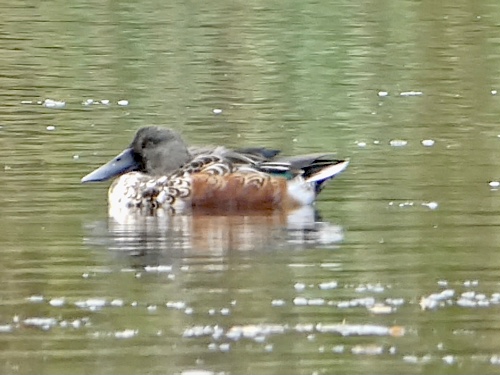
Shoveler 1 male coming out of eclipse.

Coot 2
Moorhen 5 including 1 immature 
Little grebe 1 now almost in winter plumage

If you've ever wondered why this pond is called the "no swimming" pond. It's this sign, once prominent, now surrounded by scrub and trees. I'm probably the only person to have read it in a decade!
It says: Danger. Keep out. Do not swim
Well, you have to call a pond something!

Heysham skear - low water 15:40 (MD)
This was the only walk I managed today, and this was really just a quick look.
Great Crested Grebe 2
Red-breasted Merganser 4 (2+2)
Eider 7
Little Egret 8
Waders: Oystercatcher, Curlew, Redshank, Turnstone and Dunlin 5
Cormorant and Herring gull resting on skear edge


Thanks to Jimmy (via Janet) for this shot and clip of a Tawny Owl, heard most evenings at Sylvan Place. Presumably based on Heysham Head.


Tuesday, 20 September 2022

Pinkfoot heading north all day

Very light breeze again, from east in the morning before switching to SW after lunch. Overcast for much of the day, but some sunny spells, becoming prolonged in the evening.

Pink-Footed goose 
Early morning summary from Pete - 6121 northbound, the combined total from Heysham and Middleton with no duplication.  These birds were spread over 2.5 hrs, not a low flying mass ex roost flight to eg Oxcliffe road feeding areas.  Therefore almost certainly a readjustment by overshooting birds heading back to perhaps the Solway area.   
David Kaye also recorded 5 skeins totalling 474 from Knowlys Rd again all heading north (between late morning to early evening)
I had 4 skeins late evening (MD) 267 again heading north, although one was very low
So the total today 6,682 - all north

Middleton Nature Reserve 
Report from Alan:

An interesting morning. Only 20 birds captured in the nets for ringing:

Grey Wagtail 4

Wren 3

Robin 3

Blackcap 4

Chiffchaff 4

Reed Bunting 2


Only one other Grey Wagtail seen other than the four caught. 46 Swallows passed through the reserve but no Meadow Pipits seen (or attracted to the MP3 lure) in contrast to yesterday's catch of 15.


I just had a quick passing check of the two main ponds (MD)

Main Pond

Mute pair plus 7 cygnet 

Mallard 2 pair

Moorhen 2


"No swimming" pond

Gadwall 18

Moorhen 2

Shoveler not on the pond, but one flew over. There aren't many ducks that can be identified from a silhouette from below. Shoveler can be!

Shoveler 


Heysham Nature Reserve 
Report from Jean:

Apart from the Pink-footed Geese there were 4 Chaffinch south, 1 Skylark south and 36 Swallows north. A flock of 8 Mistle Thrushes landed on one of the pylons before moving on. 


Ringing

The highlight was a Cetti’s Warbler

Another 3 Grey Wagtails caught and colour ringed 

Chiffchaff 2

Robin 3

Goldcrest. 1

Blackcap 1

Goldfinch 6

Greenfinch 4

Blue Tit 1

Great Tit 3 new and 1 retrap

Dunnock 1

Wren 1


South shore
Little Egret 6 on Red Nab (typically just 3 here) - Kevin

I had a walk out on the shore again, the tide was coming in but still had a long way to go so plenty of wet mud towards the water line (MD)
Rock Pipit 2
Wheatear 1
Shelduck 15 (3,1,4 & 7) all south
Shelduck 

There was a large feeding mixed group of waders towards the waterline, but the bright sun was low and made seeing nearly impossible. Eventually I managed to get near enough and at an angle to be able to pick out individual birds there were:
Bar-Tailed Godwit c60
Grey Plover c50
Knot c40
Dunlin c100
Sanderling 6
Even so it was still very difficult viewing. These are five of the Sanderling 
Sanderling along the waterline 

I was just wondering what my next move was going to be, when the only low flying flock of Pinkfoot all day, flew north just above the waterline
Pink-footed geese also silhouetted against the strong sun. 
They were only a few metres above the waterline, perhaps they had been resting on the beach.
They lifted all the waders which also flew north, I originally cursed the geese, but the waders landed about 50m north, allowing me a corridor to get to the waterline and wade out a little. Now I had the opposite problem, the sun was so bright as to tint the birds!
These two clips contain the Sanderlings (there is an option to view in slow motion that you may find beneficial)


Other waders
Redshank 15
Turnstone 1
Ringed Plover 18
Oystercatcher c400

Mediterranean gull 1 adult

This Bar-Tailed Godwit was feeding and a Black-Headed gull pinches its lugworm, all to easily in my opinion. It will lose the next one too!

David Kaye took this shot of a pony in the paddocks at Knowlys Rd. Presumably the Magpie is finding something to eat, but only room for one. The other bird has to wait!


Monday, 19 September 2022

What a difference a day makes

Very light and variable breeze, predominantly from the north in the morning, NW by evening. The day alternated between bright sunshine and thick cloud, but it managed to remain dry.

Middleton Nature Reserve 
Report by Jean:

Despite not seeing or hearing Meadow Pipits overhead, 15 were caught and ringed. Chiffchaff dominated the warbler catch No retraps today:

Grey Wagtail 3

Meadow Pipit 15

Chiffchaff 10

Blackcap 1

Robin 5

Goldcrest 2

Wren 1

Dunnock 1

Blue Tit 1


Vis:

Pink-footed Goose 352 in 6 flocks mainly N

Grey Wagtail 9

Cormorant 7 south

Swallow 7

Meadow Pipit 17+

Chaffinch 1

Linnet 2 

Mediterranean Gull 1 adult

Magpie 2


A Cetti’s Warbler wandered noisily round the eastern marsh. 


Heysham skear - low water 12:50 (MD)
This was a test walk really, low water at 3.4m barely uncovers the inner skear, so no distance to walk.
Eider 4 (2males)
Red-breasted Merganser 10 (4 & 6)
Shag 1 x 2nd calendar year 
2cy Shag with Lesser Black-Backed gull

Waders: Oystercatcher, Curlew, Redshank and Turnstone plus
Knot 52 in one flock, showing well in good light, unfortunately none were ringed
Knot with the South Lakes for a backdrop
Knot

South shore  - high water 19:00 (MD)
Completely different to yesterday, not least as I was looking forward to my evening walk. I was feeling much better today perhaps I was just suffering from a touch of old age!
But, despite my enthusiasm, there was little to see, unfortunately these tides are so low all the exposed mud was dry. It's strange that I walked twice as far to get to the high water line this evening, than I did to get to the low water line on the north side this morning!
Dunlin - there was a flock feeding along the waterline as I was walking out, but they quickly moved on as the tide reached the dry mud. I probably would have been better going out earlier. Apart from those, just these two resting in the brief evening sunshine.
Dunlin
The only other waders were: Oystercatcher, Curlew and Redshank plus
Bar-Tailed Godwit 4
Bar-Tailed Godwit, also resting in the late sun

Shelduck 3 flying south
Wheatear 1 on foreshore 
It was a nice evening!

Sunday, 18 September 2022

First Shelduck back and more Sanderlings

Quite a fresh NW wind, overcast for most of the day with some light showers. The sun peeked through briefly in the evening.

South shore - "high" water 17:30 (MD)
I've been a bit under the weather today, probably a bit of "man flu". So didn't venture out till this evening, even then it was hard work, the mud felt stickier than usual and the sun made its only appearance of the day to be behind the waders, making viewing difficult!
There was a feeding group of 28 Ringed Plover and 2 Dunlin along the first patch of wet mud. Probably the group that the Curlew Sandpiper had been feeding with, but no sign of it today.
The tide doesn't come far up the beach on these low neap tides (just 7m today), leaving a very big beach and a very distant waterline. And when you get there, this is what you see!
Waders silhouetted by the sun, these are Dunlin

I had to paddle out a way and look back, the tide was still coming in, but only very slowly. This helped as the waterline became increasingly further away. 
It was mainly Dunlin that moved in to feed in front of me, but there was one Sanderling with them.
Sanderling, centre, with Dunlin

There were three more further along the beach 
Three Sanderling, far left, far right and centre.
Sanderling
I haven't had a chance to scrutinise yesterday's inflight shots of Sanderling in a large, passing, Dunlin flock, but there were probably c15. These are some of them
Some of yesterday's Sanderling in a Dunlin flock
Estimates of other waders on the waterline 
Bar-Tailed Godwit 50
Grey Plover 20
Knot 50 
Dunlin 150

Mediterranean gull 1 adult
Mediterranean gull 

It was obviously going to rain so I started to trudge back. 
Shelduck 1 - I was going to say "distant", but then realised, that the duck was close inshore, it was me who was distant!
First Shelduck reported this autumn 

Rain it did, but not for long.
 Hopefully, the pleasure of walking will return by tomorrow (MD)


Saturday, 17 September 2022

Another sad loss!

Tom Wilmer
Tom died this afternoon after being admitted to RLI.  Tom was a key figure in the early days of the observatory with notable fieldcraft skills and awareness of possibilities which, for example, produced the first Common Rosefinch and second and third Melodious Warblers for Lancs as well as lots of ‘bread and butter’ log coverage.  He was a key figure in Educational work in the old classroom until Power station executives unfortunately decided not to continue with the programme.  Tom then moved on to other things but still made occasional visits to Heysham if the Seawatching looked promising or there was a nice October easterly.  He was a valued member of the local birding scene and will be sadly missed


Once again, the wind started light from the north then freshened as it moved to NW. plenty of sunshine for most of the day.

Heysham skear - low water 10:50 (MD)
Little Egret 36 at least - there are 27in this clip
Pete advises that there were 255 little egret in the Ashton hall roost last Sunday and a few may have been missed!

Grey Heron 1
Red-breasted Merganser 12 (2, 4 & 6)
Great Crested Grebe 2
Waders, only: Oystercatcher, Curlew, Redshank and Turnstone 
Peregrine 1 adult flushed them three times, but didn't see it catch anything 

South shore  - high water 16:30 (MD)
Grey Wagtail 1 in the newt pond again
Rock Pipit 1 near rocky outcrop 
These neap tides do not cover the mud, and the area where the Curlew Sandpiper has been feeding is now dry. No good for feeding just resting, which is what 34 Ringed Plover and 2 Dunlin were doing.
The other consequence of the dry mud is that the gulls tend to sit on it rather than stand, so little chance of checking for rings!
Common and Black-Headed gull resting on the dry mud

There were plenty of waders along the waterline out from the foreshore.
Bar-Tailed Godit 4
Grey Plover 100+
Knot c50
Dunlin c200
Sanderling
Two Sanderling at the front - the waders segregated by leg length

But there were other flocks of waders flying past to the south, one flock of Dunlin certainly contained some more Sanderling, a closer check of my pictures is required to establish how many (not a job for tonight).

Linnet c40 on saltmarsh 

Butterflies in Nature Park
Comma 2
Red Admiral 2
Speckled Wood several 
Large White 2
Large White

Second generation female Large White, looking splendid!

Pink-footed Goose 1000+ heading south early morning over Middleton (John)
At least one skein moving north late evening (Janet)


Friday, 16 September 2022

New egret high count

A light, but cold north wind early on quickly freshened. Sunshine for most of the morning becoming cloudier by mid afternoon.

Middleton Nature Reserve 
Report from Alan:

It was cool and very clear first thing with a northerly breeze that increased to 15mph by 10 o'clock - no good for mist nets.

There were few grounded migrants and little overhead besides around 370 Pink footed Geese in five separate groups plus another couple of groups heard but not seen. Three swallows flew low over the reserve from south to north into the wind. Three more Grey Wagtails were ringed for the colour ringing project.

A very meagre total today:

Grey Wagtail 3

Robin 2 +1 retrap

Blackcap 1

Chiffchaff 1 + 1 retrap

Reed Bunting 2


I had a walk around mid morning (MD)

Mute pair still with their 7 cygnets on main pond.

"No swimming" pond:

Coot 2 together

Moorhen 2 adult 1 immature 

Gadwall 16 (8 male and 8 female)

Shoveler 4 seemed to be 2 male, 1 female and 1 female/immature)

Male Shoveler left with either a female or immature
The other male was slightly further out of eclipse and was following, what was presumably an adult, female around. Although she didn't seem overly interested.


Little grebe 1 adult in fading summer plumage. In this clip the female Gadwall is totally oblivious to the grebe till it dives.


Common Snipe 1 flushed from main pond

And that was it bird wise.


Dragonflies 

Emperor 1 male (a late record for this species)

Migrant Hawker 3 male 1 female

Common darter several male and female but all aged


Butterflies 

Red Admiral 2

Speckled Wood several

Comma 2

Very fresh looking Comma


Heysham inner skear

Yesterday Kevin Singleton counted 41 Little Egret on and around the bay formed at the edge of the inner skear as the tide rises. Birds were already moving inland so there could have been more. Pretty sure this is the highest count for the recording area. Unfortunately Kevin didn't have his camera with him at the time, and only visits Heysham about once a week, so I said I would go down today (MD)

Other duties today meant that I could only get there an hour earlier in the tide than Kevin yesterday. Even so there were at least 33 Little Egret strung along the waterline and in the small pools in the stretch between Whinnysty Lane and Grovenor Rd. Not much point taking a picture of the birds today as they were so well spread, but this shot shows the northern half of the area, the large pool on the left is what will become the "bay" later. No Egrets feeding in there in this shot, but it will be filled with fresh water from the run offs. Only when the tide reaches it will the shrimps and small fish move in.

About half of today's 33 Little Egret are "technically" in this shot
Nice picture of the bay, if nothing else!
Kevin did have his camera with him earlier yesterday 
and took this nice shot of a Turnstone 

South shore (MD)

I checked the beach out from saltmarsh first. There were no waders feeding inshore today. Along the tideline were:

Grey Plover 150

Knot 90

Dunlin 30

This clip shows a wall of spume being pushed up the shore by the wind and waves. I have covered spume before. It is perfectly natural and just made up of bubbles created by the breaking waves, proteins in the water (a sign of healthy water) sustain the bubbles. Originally white, but they pick up the silt in the shallow water and take on the colour of the mud.


On the way back to the saltmarsh a flock of c50 Ringed Plover shot past and headed towards Red Nab.

Linnet 25 on saltmarsh 

Starlings 200+ feeding on brambles around saltmarsh 

Starling laden brambles
No Wheatears today

As soon as I saw this morning's third quarter moon, I realised that I had given poor advice about timings for checking Red Nab yesterday. Either quarter moon means that we are in neap tides not approaching them as yesterday's 8.7m tide suggested. I'd forgotten how high this set has been, and how quickly they needed to drop. I had expected (always check the tide tables!) today's tide to be about 8.5m it was in fact 8.2m and tomorrow 7.6m will barely reach Red Nab! Today's tide too was a long way from the sea wall. The Ringed Plover were there, but just tiny silhouettes. No chance of spotting anything more interesting with them.


Goldcrest 1 with Long-Tailed Tits in the Nature Park (David Kaye)

Grey Wagtail 2 - 1 on Red Nab plus 1 on Nature Park newt pond this evening  (Angela Gillion)

Angela managed a record shot with her phone

Finally, on the 21st September I posted a picture of an Alder Leaf Beetle, saying that it was the first I'd seen. Rob from Wigan sent a comment saying that they were everywhere there and devastating the local, Alders. Well, Rob was right, they are everywhere here now and devastating the Alders. Perhaps I've missed them in the past. This shot is from the Alders at the entrance to the bottom car park at Middleton Nature Reserve. The Alders below the small anemometer are no better!
Damage caused by Alder Leaf beetle 


Thursday, 15 September 2022

Curlew Sandpipers become more accessible

Almost calm first thing, the very light north breeze freshened slightly by the afternoon as it drifted to NW. largely overcast in the morning, but plenty of sunshine after lunch.

Pink-Footed Goose 2,630+
Jean had c1,900 over Middleton which will not overlap with
David Kaye's  check from Knowlys Road. 8.30-13.40  
730 in 14 skeins 

largest group 144 at 10.34.


I saw 9 skeins from the skear totalling 542 between 09:00 - 10:30 (MD). Many of these will be in David's total, but at least three skeins were high to the west and probably well out of David's range. What was interesting today, is that although most of the skeins were high and heading due south, three were low and were adjusting direction as if searching for a local landing. One skein of 17 headed due east overland.


Middleton Nature Reserve 

Report and pictures from Jean:

It seemed a quiet morning but in fact plenty of birds were moving quietly through and we caught and ringed 40 birds between 0700 and 1130 (see totals below). Moving through more noisily were flocks of Pink-footed Geese which came through from about 0730 to 1155hrs. Some were extremely high and almost all were heading due south, many were heard but not seen. There seemed to be a continuous stream between 1140 and 1155 but they weren't visible. In total, visible birds numbered 1410 but the 7 invisible flocks could well have brought the total to 1900. The geese seen over Middleton don't include flocks seen over the sea.

A typical "view" of the high Pinkfoot over Middleton 

Ringing:

Grey Wagtail 5

Meadow Pipit 12

Chiffchaff 9

Blackcap 3

Goldcrest 3

Great Tit 2

Blue Tit 1 (a retrap)

Long-tailed Tit 1

Treecreeper 1

Robin 1

Dunnock 1

Wren 1 (a retrap)


Ringing isn't just about catching and ringing birds, a lot of metrics are checked to ensure as much information as possible can be learned from the bird. Jean provides a couple of interesting examples here (MD)

Note how yellow this juvenile Grey Wagtail is suggesting it is a male. This was borne out by the wing length (87mm) - the average is 83mm and the maximum recorded is 89mm


On the continent you can find Eurasian Treecreepers and Short-toed Treecreepers. In the UK the latter is a rare vagrant, but it can occur. One diagnostic feature separating the two is the pale panel on the wing. Eurasian Treecreepers have a pronounced “step” in the pale panel (see red arrow) and square ended edges to the pale portion whereas Short-toed Treecreepers don’t have this step and the edges are pointed (see number 8 on the second photo). So the Treecreeper we caught today was definitely a Eurasian Treecreeper.

Today's Eurasian Treecreeper 

Reference picture of Short-toed Treecreeper 

Vis totals (including ringed birds):

Pink-footed Goose c1900

Swallow 47

Goldfinch 22

Liinnet 3

Meadow Pipit 15+

Grey Wagtail 12 

Pied Wagtail 1

Reed Bunting 1

Lesser Redpoll 1

Raven 2

Jackdaw 17

Carrion Crow 4

Starling 10


Heysham skear - low water 09:50

Eider 7 males

Great Crested Grebe 10

Red-breasted Merganser 15 (2, 3, 4 & 6)

This group were feeding, but one bird (mum?) looks to be on guard to keep the gulls at bay. One catches what looks like an eel, but is probably a Butterfish.


This Cormorant has caught a Flounder, but it is too large to fit down its gape so it discards it. I have seen them do this so many times, and it would seem so have the gulls! This Great Black-Backed calls for its youngster, who lands just in time to grab the fish. The Cormorant has a bit of a dig at it, but didn't really want the fish back.

The youngster took its prize ashore. A fish this size is too large for them to swallow too, but they will work on it over two or three days (they will leave it further up the beach later for the crabs and shrimps to nibble on between low waters) until eventually it is narrow enough to swallow. My observations in the past suggest that the youngster will do all the pecking and get all the bits it can, but when the time comes it will likely be the adult that swallows the remaining carcass.


Heron 1

Little Egret 5

Waders, just: Oystercatcher, Curlew, Redshank and Turnstone 


Wigeon flock of 23 seen from Whinnysty Lane by Kevin Singleton 


South shore - high water 15:10

I checked the beach out from the saltmarsh as the tide was pushing the waders up and to the south (MD)

On the waterline were many hundreds of waders including Bar-Tailed Godwit, Knot, Grey Plover and Dunlin most moved south, but the tide was lower today and came in more sedately so some just moved with it. These Grey Plover with a couple of Knot ended up just in front of the slipway.


It was time to leave, the tide here comes up behind you. As I headed back to the nearest crossing point towards the old Pontins, there was a feeding group of c20 Ringed Plover, 5 Dunlin and.....

Curlew Sandpiper 1 juvenile - they were not there when I walked out, so timing here is hit and miss. This clip pans out to show the location.


But the tide was making quickly and they soon left and flew towards Red Nab. I managed some nice diagnostic in flight shots


Curlew Sandpiper

The delay meant that I had to walk up as far as the faux castle before I could cross the quickly filling creek. The risk here is of getting wet feet, not really dangerous. This flock of mainly Grey Plover and Knot were on the southern extent of the recording area, until a juvenile Peregrine Falcon lifted them. You can see it zip through the flock in this clip


Juvenile Peregrine Falcon - failed again!
A walk to Red Nab located
Rock Pipit 6 (3 on rocky outcrop plus 3 Red Nab)
Lapwing 32 saltmarsh 
Linnet 33 saltmarsh 
Wheatear 3 foreshore 

The tide was still rising when I reached Red Nab, this means the waders need to keep moving. I quickly relocated the juvenile Curlew Sandpipier

When they weren't moving, the Dunlin and Sandpiper alike were resting with their bill hidden, it took a while before I realised that there was more than one. There were definitely two and I though possibly three. But checking my pictures I could only definitely see two. The only view I managed to get them both in, one had its head down.
Two Curlew Sandpipers - the two lower birds
Kevin Eaves checked Red Nab a little later, unfortunately by this time the tide was ebbing and the waders were resting. He did manage to locate both birds, but in 30 minutes failed to see a bill!
These tides are a good height, not too high to flush all the waders, but high enough to bring them close to the sea wall. About an hour before high water should be worth checking for the next few days.