Sunday, 15 August 2021

First diving duck returns

A fresh west breeze mainly overcast with light showers.

Not a lot today.

Just a quick sweep by Pete from Ocean Edge 90 minutes before high water, located:
Mediterranean gull 10 (3 juvenile)

Heysham skear - low water 11:20
Great Crested Grebe 5 (2 + 1 + 1 on the water plus 1 flying south)
Eider only 4 today
Little Egret 13
No sign of any Mediterranean gulls. Waders similar to yesterday, minus the off passage flock of Redshank.

Middleton Nature Reserve 
Just a quick check of the three main ponds in the afternoon 
Mute Swan pair plus 9 cygnets on main pond, pair on Tim Butler, the 2 cygnets not seen but they would have been somewhere nearby. 
Mallard 5
Gadwall 7 - female plus 3 young and a male with 2 female/immature 
The male Gadwall, in the foreground of this clip,  is still in eclipse.

This is one of the female/immature Gadwall having a bath

Tufted duck 1 male.
Male Tufted duck, in at least, partial eclipse.
It was being very secretive.

Little grebe 1 adult on Tim Butler 

No dragonflies seen and the only butterflies were a few, Meadow Brown, 1 Gatekeeper, 2 Large White and a Peacock.

Saturday, 14 August 2021

The Lion lies down with the.......mussel

The westerlies continues. Overcast for most of the day with light showers in the afternoon.

The only records so far are from my check of Heysham skear at low water (MD)
Great Crested Grebe 5 (2 + 3)
Eider 34
Little Egret 15
Grey Heron 1
Oystercatcher c500 on the middle skear - outer skear not checked
Curlew c50
Redshank c150 - including a presumed off passage flock c100 in an area where they do not routinely feed.
Turnstone c50
Juvenile Turnstone 
Ringed Plover 25
Mediterranean gull 1 - This looks like the same bird that I posted yesterday flying to the harbour mouth from the north. I can't recall ever seeing one on the skear before, hopefully the start of a new trend, there appeared to be plenty to eat. This first clip it was on the water on the north side of the skear. It seemed to find something to eat both times that it landed. It then flew to the skear.

It started feeding as soon as it landed on the skear, and certainly found a couple of morsels to eat. 

Today's title refers to Lion's Mane Jellyfish. There were several stranded on the beach, but this small one had dropped lucky and ended up being stranded in a small pool, just large enough for it to retain its form.
Lion's Mane jellyfish stranded in a shallow pool
It was pulsating, you can see the resultant indents in the surrounding mud

I've not had an active but captive Lion's Mane before, so I thought  I'd see how it reacted to a piece of broken mussel. This wasn't easy, mussel in left hand and camera in right, binoculars held between teeth! So I missed the actual encounter. No matter, the interesting thing happened afterwards. As soon as it "realised" that it was in contact with food, the pulsating stopped.

I know very little about jellyfish behaviour, but it makes sense to not swim away from an area that has just provided a meal. Jellyfish can't really dictate where they go, the pulsating will just allow it to rise higher in the water. So stopping pulsating would cause it to drop lower in the water. Or, perhaps, the energy used to pulsate is redirected to the tentacles to retrieve the food. They don't have to move quickly as any prey should be paralysed. Either way it started pulsating again and it definitely took hold of the mussel.

It hadn't long to wait, the incoming tide was only a few minutes away. I would have waited and recorded its release, but the tide would have silted the area up leaving visibility too poor to see anything. Hopefully it will be lucky, but the prevailing west winds will make it difficult. Just another reminder, these do sting, both the short red and long white tentacles have stinging cells. They will not harm you, but the sting isn't pleasant (I have been stung several times whilst  shrimping in the dark).

Friday, 13 August 2021

Hawker treble

A stong SW wind all day, mainly sunny.

South shore
Both myself (MD) and Kevin checked the sea for any wind blown stuff, but they either didn't arrive or were too distant for binoculars.
Wheatear 1 on Red Nab
Rock Pipit 2 on Red Nab and foreshoe
Mediterranean gull - at least 15 at low water. Minimum 11 adult/3cy on beach next to wooden jetty, 3 juvenile on seaward end of No.1 outflow and 1 adult/3cy out from the harbour mouth.
Later they were more spread around. This bird came from the noth side and settled just out from the harbour.

I like this clip, there was at least one Mediterranean gull resting with the Black-Headed gulls in the lea of No.2 outflow (just right of centre on the clip). Everything was relaxed, then a new BHG arrived and moved on another that was, "sat in my spot on this beach"......... A behaviour previously only witnessed in humans!


Sheltered from the wind it was very warm. There were lots of insects in the nature park behind Red Nab.
Kevin took this nice shot of a Painted Lady.
Painted Lady 

There were also:
Red Admiral 3
Peacock 1
Comma 1
Large White 2
Small Tortoiseshell 3
Common Blue
Speckled Wood 
Gatekeeper 

Plus a trio of Hawker Dragonflies 
Migrant Hawker 3
Brown Hawker 1
Southern Hawker 1

Male Southern Hawker

I have received a very interesting comment regarding Wednesday's post of the mass exodus of the Oystercatchers. My thanks to "Throbshire", sorry I don't know any other identity. 

I can offer you a possible solution to your exodus question. At about 10.00 on Wednesday my wife and I saw a big bird of prey heading towards Walney, roughly on a line from Heysham Sunny Slopes. Too distant to be 100% sure, but thought it was probably an Osprey at the time


So, this seems to be the final piece of the puzzle, just as the tide was moving the Oystercatcher from the outer  skeer, a large raptor, probably an Osprey drove them all to the south side. I do like it when evidence emerges to support a theory. Although evidence to disprove a theory is also good, much better than not knowing. (MD)


Thursday, 12 August 2021

Gadwall returning

The fresh breeze started in the south before moving SW.  Some cloud, but the sunny periods increased during the day.

First, a request. Janet lost her wedding ring whilst checking Middleton Nature Reserve, possibly on the road where the old brick building used to be. It's a long shot, but if anyone does find it please either contact Janet directly or myself (MD).

Heysham skear - low water 09:20
Great Crested Grebe 3
Eider 26, they appear to be in family groups, the males, still in eclipse. The gull in this clip is diving for crabs, it seems optimistic to find one below of a bunch of Eider.

Little Egret at least 18
Grey Heron 1
Oystercatcher c500 on middle skear, fewer than of late, but the outer skear was also exposed, more on that later.
Turnstone c60
Curlew c50
Redshank c40
Bar-Tailed Godwit 1
Ringed Plover c20 where they normally feed on the inner skear plus 15, presumed off passage on middle skear.
Dunlin 1

One of the reasons I went down today was to try and understand what caused the mass exodus of Oystercatcher yesterday (hoping a large raptor would show up!). The outer skear was exposed, but not checked in detail, but this shot shows two things. First, it is still nicely covered in mussels (it's the area beyond the first channel, running across the image). Second, it wasn't densely packed with Oystercatchers, but it is a large area.
The outer skear is the dark band on top of this image.
It is larger than it looks, at least 0.5km further to the main channel.
Nevertheless, these last few tides will have been the first time it will have been available for feeding for two weeks, so presumably more food there than the middle skear. The timing of the oystercatcher flying past the roundhead yesterday coincides with when the tide covered the outer skear, so clearly a factor. But it didn't happen today, and it didn't happen on Tuesday when the LDBWS were on the south wall. I can only guess that something else occurred at the same time yesterday, probably a large raptor, causing the already moving birds to continue to the south side. (MD)
Just another skear related snippet. These spring tides drain quickly, leaving lots of standing water on the skear, this inevitably finds its way to the sea, and once a channel is formed the water gushes out, removing any loose sediment. This is what has happened on this shot.
The mud has been swept away in this channel, leaving the tubes of tube worms exposed.
 These are not Honeycomb worms, more likely Sand Mason worms.

Middleton Nature Reserve 
Just a quick look round mid afternoon 
The wildfowl was as per Tuesday except for 9 additional Gadwall, so 13 in total with the female and her young. This clip starts withe the female and her three young, she wasn't overly welcoming. Next is an eclipsed male, the rest all appear to be female/immature.

The insects were similar to Tuesday too, except fewer butterflies, plus four Migrant Hawker Dragonflies.
Migrant Hawkers


Wednesday, 11 August 2021

Mass exodus

The fresh breeze started SE but moved to south then SSW and freshened. A few light showers becoming heavier by evening.

Middleton Nature Reserve 
Ringing report from Alan:

John and I set nets this morning and caught a reasonable 35 birds between us. Conditions were overcast and a little breezy but no rain:


Wren 2 +1 retrap

Blackbird 1 retrap plus a single nestling being fed by its parents in a nest on the east side.

Sedge Warbler 2

Reed Warbler 1

Lesser Whitethroat 2

Common Whitethroat 9

Garden Warbler 4

Blackcap 2 + 1 retrap

Chiffchaff 2

Willow Warbler 5 + 2 retrap


10 Swifts seen moving southwards but just a single Swallow.


Janet found some fresh droppings on the edge of the main pond. These are located on top of old droppings that are now reduced to a collection of fragments of crayfish shells. Once again the main suspect is Otter, but neither of us are experts on Otter spraints. If anyone wishes to see the picture Janet took today please either contact Janet directly or myself (MD email address on sidebar ).


South shore mid morning

Wheatear 3

Rock Pipit 4 - 2 on foreshore plus 2 on sea wall

Mediterranean gull minimum 10 - 6 on beach near wooden jetty at least 3 juvenile feeding on outflows and seen from several locations along shore. As was this immature bird.

2cy Mediterranean gull (MD)

Bar-Tailed Godwit 1

Willow Warbler 1 in scrub near waterfall

There were 6 Linnet and 4 Goldfinch feeding on thistle seeds near the lighthouse. I can, and do, sit in my armchair and watch Goldfinch feeding on sunflower seeds from the feeder just outside the window, but it is somehow much more satisfying watching them feed naturally on seeds. This young Goldfinch seemed to be proficient in quite difficult conditions.


Grey seal 1 - shame one didn't show for the party from LDBWS yesterday.


Today's title refers to, what must have been, the entire population of north side Oystercatcher (at least 3,000) flying past the roundhead in less than 2 minutes. Something had seriously spooked them. It was 10:20, the tide had only been coming in for 90 minutes so they would have still been on their feeding grounds on the shore. So either a large bird of prey or something man made, e.g.  the RNLI hovercraft moves everything when they test it.

This is just a flavour of the movement.


Some, but not all, settled on the beach out from Red Nab, smeared over a few hundred metres.


Tuesday, 10 August 2021

Not a lot of Meds, but enough to go round.

Another steady west breeze all day, some light showers but largely sunny.

South Shore
A LDBWS event covered the rising tide this morning.
Report from Pete Crooks:

A group of 14 LDBWS members enjoyed searching for Mediterranean Gulls at Heysham on the incoming tide this morning. Highlights in roughly chronological order:

Heysham Nature Park – 1 Painted Lady


Red Nab (Brief check at low tide) – 2 Med Gulls (1 adult and 1 juvenile)


Heysham Outfalls – 8 Med Gulls (2 adults, 2 3rd CY and 4 juveniles)

1 1st CY Kittiwake

1 Eider

8 Turnstone


Red Nab (Longer check during incoming tide) – 10 Med Gulls (6 adults, including 1 with a right leg green darvic ring, 1 3rd CY, 1 2nd CY and 2 juveniles), 

1 adult Peregrine (briefly flushing the assembled waders and gulls)

2 Whimbrel  

1 Rock Pipit.


Assuming some duplication of Med Gulls at the different locations there were a minimum of 13 different individuals – 6 adults, 2 3rd CY, 1 2nd CY and 4 juveniles.


In addition 
Dave Hawkins had another two Kittiwakes at the back of the harbour, 1 adult + 1 juvenile 

Pete Marsh remained near Red Nab:
Sand Martin 1, in-off at red nab 
Manx Shearwater 1, very distant in against the turbines
7 non-juv Mediterranean gulls flew south past OE very early on (before 1030). Also 6 juvenile seen.

Before the LDBWS group arrived I (MD) had
Rock Pipits 3 on foreshore
Wheatear 5 - 2 on foreshore 3 on saltmarsh 
Wheatear amongst the Samphire at the edge of the saltmarsh 

A check of the Buddleia near the newt pond at 11:00 found it full of butterflies again, including:
Comma 1
Red Admiral 3
Painted Lady 4
Large White 3
Plus, Common Blue, Gatekeeper and Meadow Brown

These are two of the Red Admiral, both quite faded.

These Whitethroat were near the small anemometer, I initially thought Common, but Pete Crooks, advised Lesser. There is a female feeding at least two young, although the "young" look more than capable of feeding themselves.

It was a big meal, but fed in two servings. These are a couple of stills from the clip, but I still can't decide what the meal was.

Pete (M) also reported two Common Whitethroat in the Heliport scrub plus two Willow warbler in garden near horse paddocks. There was also a Willow warbler in scrub near the lighthouse. 

Middleton Nature Reserve late afternoon 
Mute Swan pair plus 9 cygnets, just one adult seen on the Tim Butler pond, but large areas are hidden from view.
Mallard 7
Gadwall 1 female with 3 young
Coot 3
Moorhen 9
Swallows 44 to SW. they started moving through at 16:00 and were still moving at 17:00. Biggest group were 12 that had been feeding over the central marsh before moving off, the remainder were in ones and twos.

Dragonflies - not a lot:
Emperor 2
Brown Hawker 1
Black-Tailed Skimmer 2
Common Darter 6

Butterflies - also unspectacular:
Peacock 1
Meadow Brown 3
Gatekeeper still abundant 
Common Blue, less so
Speckled Wood several but becoming faded
Large White 2
Small White 4 confirmed 
Green-Veined White also 4 confirmed, all looking very warn
Several other "small white" butterflies could have been either species.

Finally, in the spring (it feels like last week!), based on the blossom, I speculated that we should have a good crop of hawthorn berries to hold onto the winter Thrushes this year. The fruits are just beginning to ripen and it looks like a bumper crop.
The Hawthorn berries are starting to ripen - bring on the Thrushes!

Monday, 9 August 2021

Ringed Plover return and Eider numbers starting to grow

A steady WSW steady breeze all day, overcast with sunny spells, light showers in the evening.

South shore
I checked the rising tide (MD)
Rock Pipit 3 - one on foreshore and two near No.1 outflow
The foreshore Rock Pipit revealed itself to be a juvenile 
You'll need to open the image to see the detail

Willow Warbler 1 in scrub near lighthouse 
Terns sp (almost certainly Sandwich) 4 out together.
Mediterranean gulls 19. At four hours before high water there were 15 adult/3cy, 1 x 2cy and 3 juvenile on the seaward side of the beach next to wooden jetty. But they weren't feeding and flew off as the tide reached them, although at least two of the juveniles were flying around and trying the outflows.
Bar-Tailed Godwit 1 on beach next to wooden jetty - it always puzzles me why more long billed birds are not feeding here regularly, every time I checked this bird it caught at least two worms.
It catches two worms in this clip

In this clip it displays all it's defining features 

Janet checked towards high water and took these shots


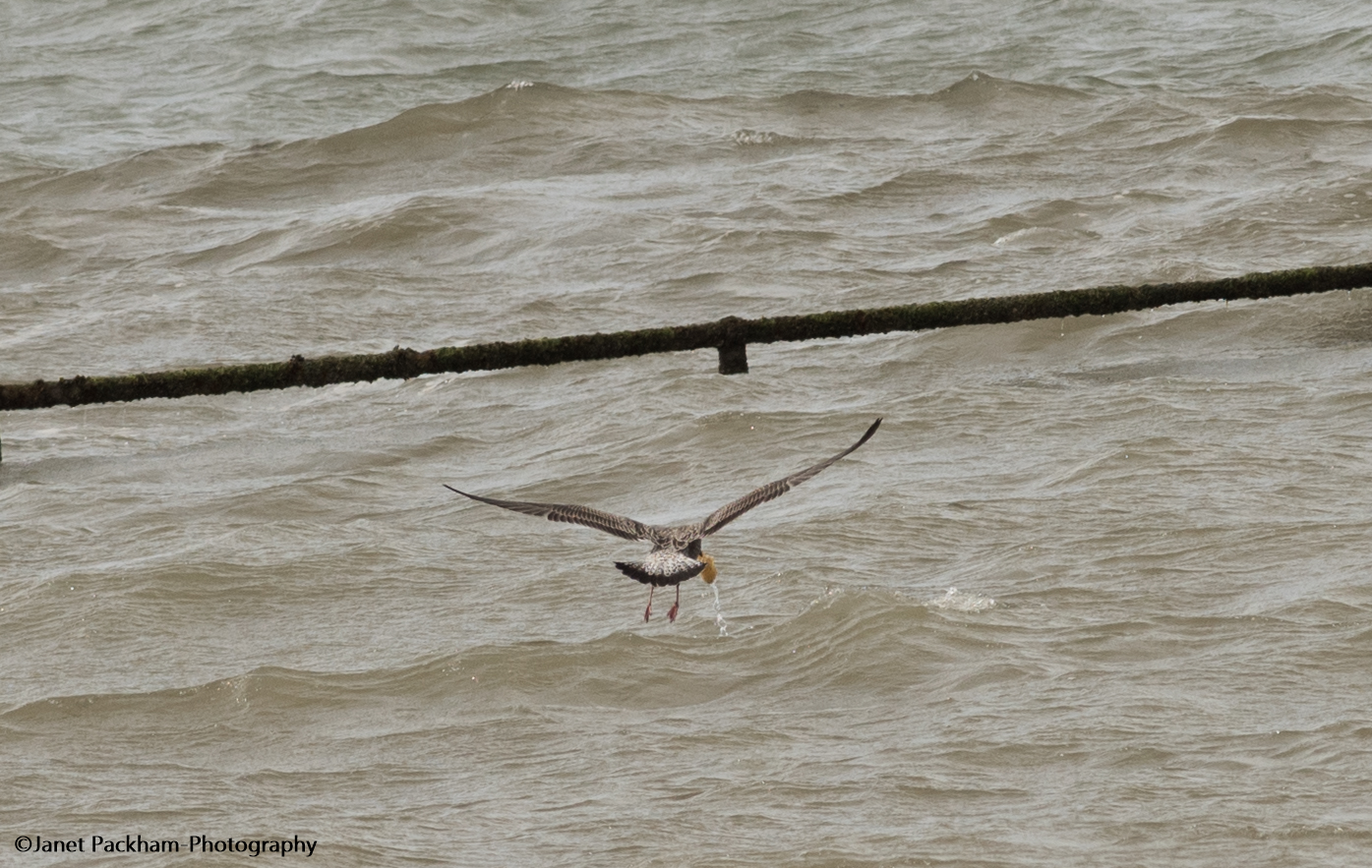
Juvenile Herring gull with Whelk egg cluster

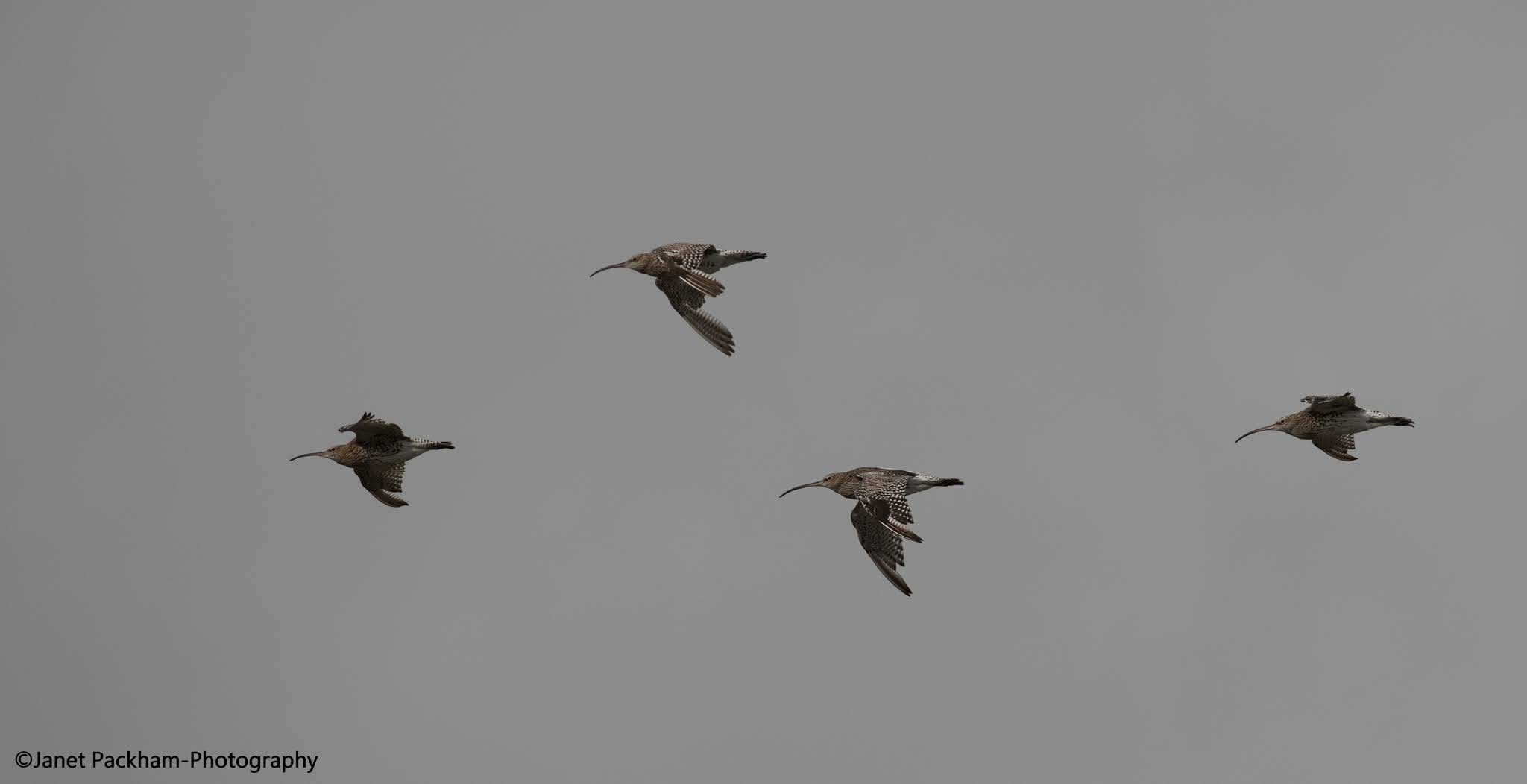
There are still lots of Curlew around

Curlew 

Plus a bird on a wire....
Linnet

Heysham skear - low water 19:30
Eider 18 
Great-Crested grebe 5 (2 pair + 1)
Little Egret 7
Ringed Plover c20 - it was nice to see and hear them back.


Sunday, 8 August 2021

Better wind, but it could have tried harder!

SW fresh wind in the morning, became stronger and more to west by late afternoon. Heavy showers.

Pete and Jean were first on the scene:
From Ocean Edge:
Mediterranean gulls 27 (4 juvenile).
Whimbrel 3

From North wall before Nick arrived, after that records would likely be duplicated:
Gannet 1
Manx Shearwater 1
Sandwich Tern 2

Report from Nick.

North harbour wall 10.45-13:15. Almost all the seabirds seen prior to 11.45.

Gannet 6 in, 1 out

Manx shearwater 11 out

Kittiwake juv out

Common scoter 57 out

Auk sp 1 in

Whimbrel 1 out

Oystercatcher c. 2000


I checked from the lighthouse late afternoon (MD)

Manx Shearwater 1 out

Nothing else within my range.

I was sheltering behind the lighthouse looking out to the sea for seabirds, meanwhile a seabird was also sheltering behind the lighthouse, and looking at me! This Kittiwake was only 5m away, also in the lea of the lighthouse.

Kittiwake in "unusual" plumage. Pete advises that it is a 2nd calendar year bird very
late moulting, by now it should be well advanced into winter plumage, i.e. adult plumage 
Remarkably, despite a few walkers, one with a dog, it was not disturbed while I was there, so I never saw it in flight.


Willow Warbler 1 in scrub

Painted Lady 1, briefly on the Unscented Mayweed - a bit of a surprise.


Mediterranean gulls - at least 18 including 2 juvenile and a 2nd calendar year 

There were at least 6 on the sea out from the lighthouse, even after the beach next to the jetty had become exposed. There were 12 on the beach when I left. This adult/3cy came in from the north to join other meds on the sea.


Not a great shot this one, but this young Herring gull appeared reluctant to let go of what looks to be a blue plastic cap. I hope it wasn't somehow physically attached to it!


Saturday, 7 August 2021

An ill wind

An unexpected deviation in the wind direction, it started SSE, before swinging back SW by the evening. Heavy and prolonged showers in the morning, becoming less frequent, but still heavy.

The wind direction made it unlikely to blow anything in, and the heavy rain made visibility atrocious. Pete tried a check from Ocean Edge but couldn't see anything on the sea.
Mediterranean gulls 7
Whimbrel 2
Rock Pipit 3
The wind still looks good for tomorrow though.

Heysham skear - low water 18:10
After a heavy shower, it was actually sunny, shame there was little to see.
Great Crested Grebe 1
Eider 2
Low numbers of Curlew, Redshank and Turnstone. c1000 Oystercatcher 
Still high numbers of large gulls, mainly Herring.

Howard was also checking the sea, but nothing seen, so he "focused" on the Turnstone. c150 split between the old Heliport wall and the lighthouse area.

Summer plumage Turnstone
As ever with high definition images, best opened to appreciate the detail 

Turnstone shaking off the rain
I bumped into Howard as he was returning to his car, unfortunately he hadn't managed to shake off the rain, and was considerably wetter than the Turnstone. But he had enjoyed himself.

Finally just a couple of moths from earlier in the week. Neither rare, but but both attractive, and nice to see.
Udea lutealis on Middleton Nature Reserve Thursday - picture by Janet


This from Kevin's overnight light trap yesterday.
I had a rather lovely Drinker Moth this morning. Again, a fairly common moth, but it's somehow eluded me until now.

Drinker moth

Friday, 6 August 2021

Plenty of wind blown sea birds, plus Med numbers continue to increase

A fresh south wind quickly strengthened and shifted to SW, ending up being a strong wind. Heavy and prolonged showers in the morning became lighter and less frequent after lunch.

By lunchtime there was plenty of wind blown birds along the mid channel.
Pete checked just as the tide was starting to ebb.
At that time a number of birds were feeding in the mid channel, including:
Gannet 6
Manx Shearwater 1
Sandwich Tern 1
A distant bird was likely to have been a Fulmar

Tipped off by Pete, I checked from the lighthouse 13:30 - 14:30. By that time all the birds were all heading out. NB, these records are only what was spotted with binoculars, there could have been many more further out (MD)
Gannet 14 - from 2nd calendar year to adult
One of the immature Gannets

Immature Gannet next to juvenile Herring/LBB gull

This clip is an adult Gannet with two immature birds (I'm not good at ageing young Gannets).


Manx Shearwater 40 - this clip shows the largest group seen together. Not easy viewing as both the birds and myself were being buffeted, but at least 11 birds involved.

This flock of 30+ dark birds flew out. I could only think Common Scoter, but couldn't really see enough. Scoter are not a species that I am very familiar with, and the last time I thought distant birds were Common Scoter, they turned out to be Pink-Footed geese! These are not geese, but I'll let you decide on the species for yourselves. (MD)

Pete advises that it's looking good for some autumnal Seawatching over the next few days 

Mediterranean gulls 
Pete checked the shore and Red Nab after high water - minimum 19 Meds
Adult Sandwich Tern and a juvenile Mediterranean gull on Red Nab

I checked the beach near the jetty, just as the tide was exposing it. 26 - 19 adult/3cy, 3 x 2/3cy, 5 juvenile. This clip is just some of them, I know it's similar to yesterday's clip, but it is an impressive scene to witness.

 Shaun did a thorough check when the beach was fully exposed, just after low water
41 adult/3cy, 1 2cy and 3 juvs 

So the absolute minimum number of Meds seen today 49 - 41 adult/3cy, 3 x 2/3cy and 5 juvenile