West light wind all day. Mainly overcast with light showers.
![]() |
| Just a still of a sand mason worm being extracted from its tube |
West light wind all day. Mainly overcast with light showers.
![]() |
| Just a still of a sand mason worm being extracted from its tube |
The wind was fresh but mainly from WNW, although it shifted slightly to west in the evening. Largely overcast with rain showers easing during the day and a bit of evening sunshine.
![]() |
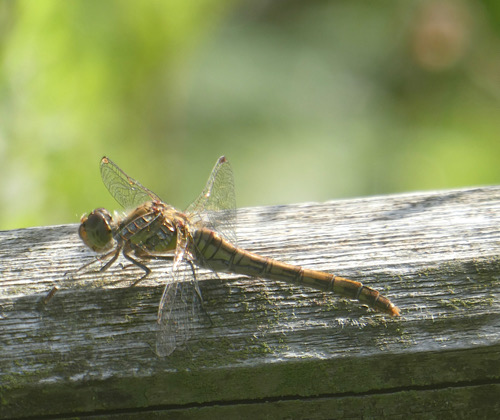
| One of two female Common Darter catching the evening sun on the wooden fence. |
![]() |
| Location of the sickly Gannet between the outflows |
There was a bit of north in the wind today, mainly WNW. Light showers with the occasional sun.
![]() |
| This morning's Wheatear near the lighthouse |
![]() |
| Starling with Black-Headed gull |
![]() |
A fresh west breeze mainly overcast with light showers.
Not a lot today.
![]() |
| Male Tufted duck, in at least, partial eclipse. It was being very secretive. |
The westerlies continues. Overcast for most of the day with light showers in the afternoon.
![]() |
| Juvenile Turnstone |
![]() |
| Lion's Mane jellyfish stranded in a shallow pool It was pulsating, you can see the resultant indents in the surrounding mud |
A stong SW wind all day, mainly sunny.
![]() |
| Painted Lady |
![]() |
| Male Southern Hawker |
I can offer you a possible solution to your exodus question. At about 10.00 on Wednesday my wife and I saw a big bird of prey heading towards Walney, roughly on a line from Heysham Sunny Slopes. Too distant to be 100% sure, but thought it was probably an Osprey at the time
So, this seems to be the final piece of the puzzle, just as the tide was moving the Oystercatcher from the outer skeer, a large raptor, probably an Osprey drove them all to the south side. I do like it when evidence emerges to support a theory. Although evidence to disprove a theory is also good, much better than not knowing. (MD)
The fresh breeze started in the south before moving SW. Some cloud, but the sunny periods increased during the day.
![]() |
| The outer skear is the dark band on top of this image. It is larger than it looks, at least 0.5km further to the main channel. |
![]() |
The mud has been swept away in this channel, leaving the tubes of tube worms exposed. These are not Honeycomb worms, more likely Sand Mason worms. |
![]() |
| Migrant Hawkers |
The fresh breeze started SE but moved to south then SSW and freshened. A few light showers becoming heavier by evening.
John and I set nets this morning and caught a reasonable 35 birds between us. Conditions were overcast and a little breezy but no rain:
Wren 2 +1 retrap
Blackbird 1 retrap plus a single nestling being fed by its parents in a nest on the east side.
Sedge Warbler 2
Reed Warbler 1
Lesser Whitethroat 2
Common Whitethroat 9
Garden Warbler 4
Blackcap 2 + 1 retrap
Chiffchaff 2
Willow Warbler 5 + 2 retrap
10 Swifts seen moving southwards but just a single Swallow.
Janet found some fresh droppings on the edge of the main pond. These are located on top of old droppings that are now reduced to a collection of fragments of crayfish shells. Once again the main suspect is Otter, but neither of us are experts on Otter spraints. If anyone wishes to see the picture Janet took today please either contact Janet directly or myself (MD email address on sidebar ).
South shore mid morning
Wheatear 3
Rock Pipit 4 - 2 on foreshore plus 2 on sea wall
Mediterranean gull minimum 10 - 6 on beach near wooden jetty at least 3 juvenile feeding on outflows and seen from several locations along shore. As was this immature bird.
![]() |
| 2cy Mediterranean gull (MD) |
Willow Warbler 1 in scrub near waterfall
There were 6 Linnet and 4 Goldfinch feeding on thistle seeds near the lighthouse. I can, and do, sit in my armchair and watch Goldfinch feeding on sunflower seeds from the feeder just outside the window, but it is somehow much more satisfying watching them feed naturally on seeds. This young Goldfinch seemed to be proficient in quite difficult conditions.
Grey seal 1 - shame one didn't show for the party from LDBWS yesterday.
This is just a flavour of the movement.
Another steady west breeze all day, some light showers but largely sunny.
A group of 14 LDBWS members enjoyed searching for Mediterranean Gulls at Heysham on the incoming tide this morning. Highlights in roughly chronological order:
Heysham Nature Park – 1 Painted Lady
Red Nab (Brief check at low tide) – 2 Med Gulls (1 adult and 1 juvenile)
Heysham Outfalls – 8 Med Gulls (2 adults, 2 3rd CY and 4 juveniles)
1 1st CY Kittiwake
1 Eider
8 Turnstone
Red Nab (Longer check during incoming tide) – 10 Med Gulls (6 adults, including 1 with a right leg green darvic ring, 1 3rd CY, 1 2nd CY and 2 juveniles),
1 adult Peregrine (briefly flushing the assembled waders and gulls)
2 Whimbrel
1 Rock Pipit.
Assuming some duplication of Med Gulls at the different locations there were a minimum of 13 different individuals – 6 adults, 2 3rd CY, 1 2nd CY and 4 juveniles.
![]() |
| Wheatear amongst the Samphire at the edge of the saltmarsh |
![]() |
| The foreshore Rock Pipit revealed itself to be a juvenile You'll need to open the image to see the detail |
![]() |
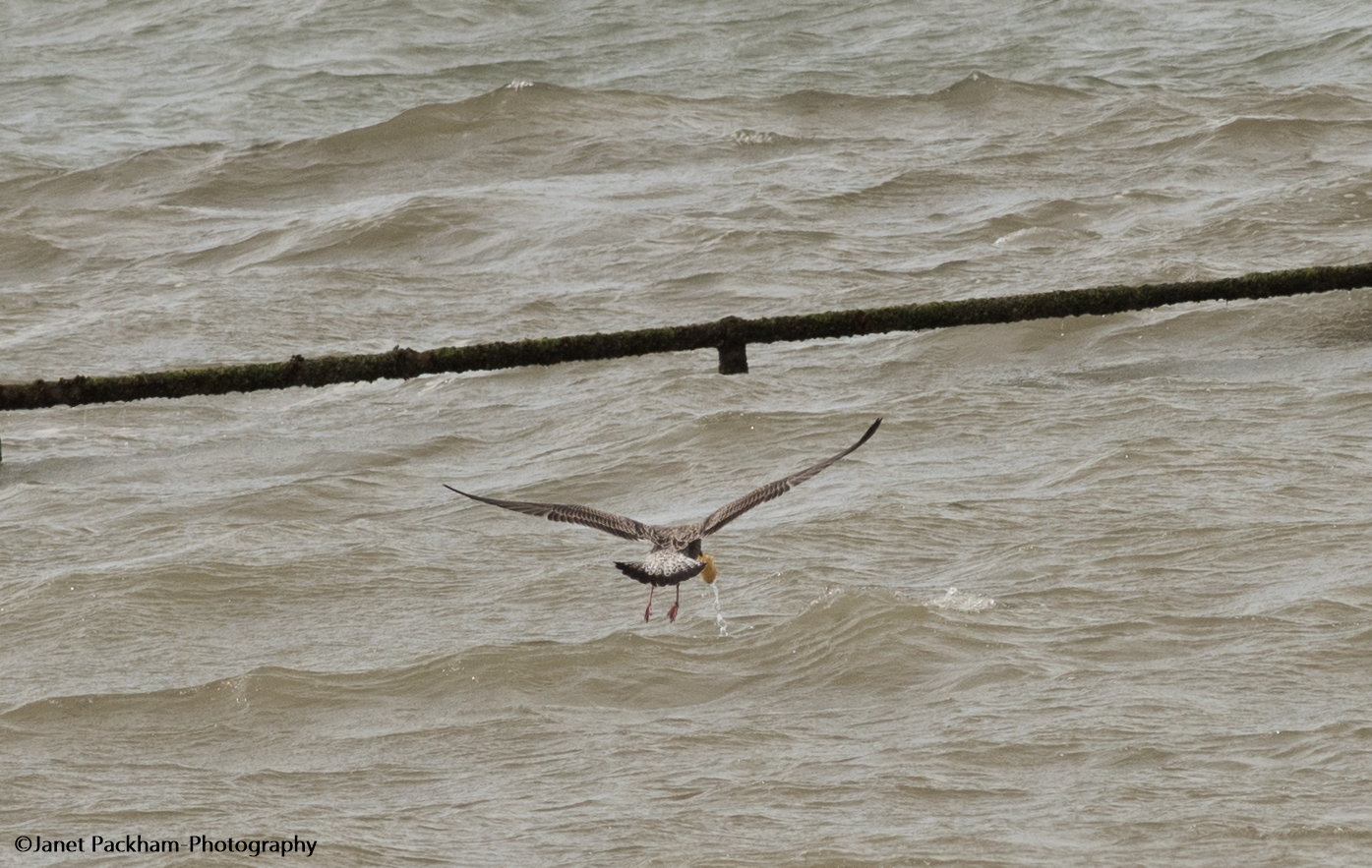
| Juvenile Herring gull with Whelk egg cluster |
![]() |
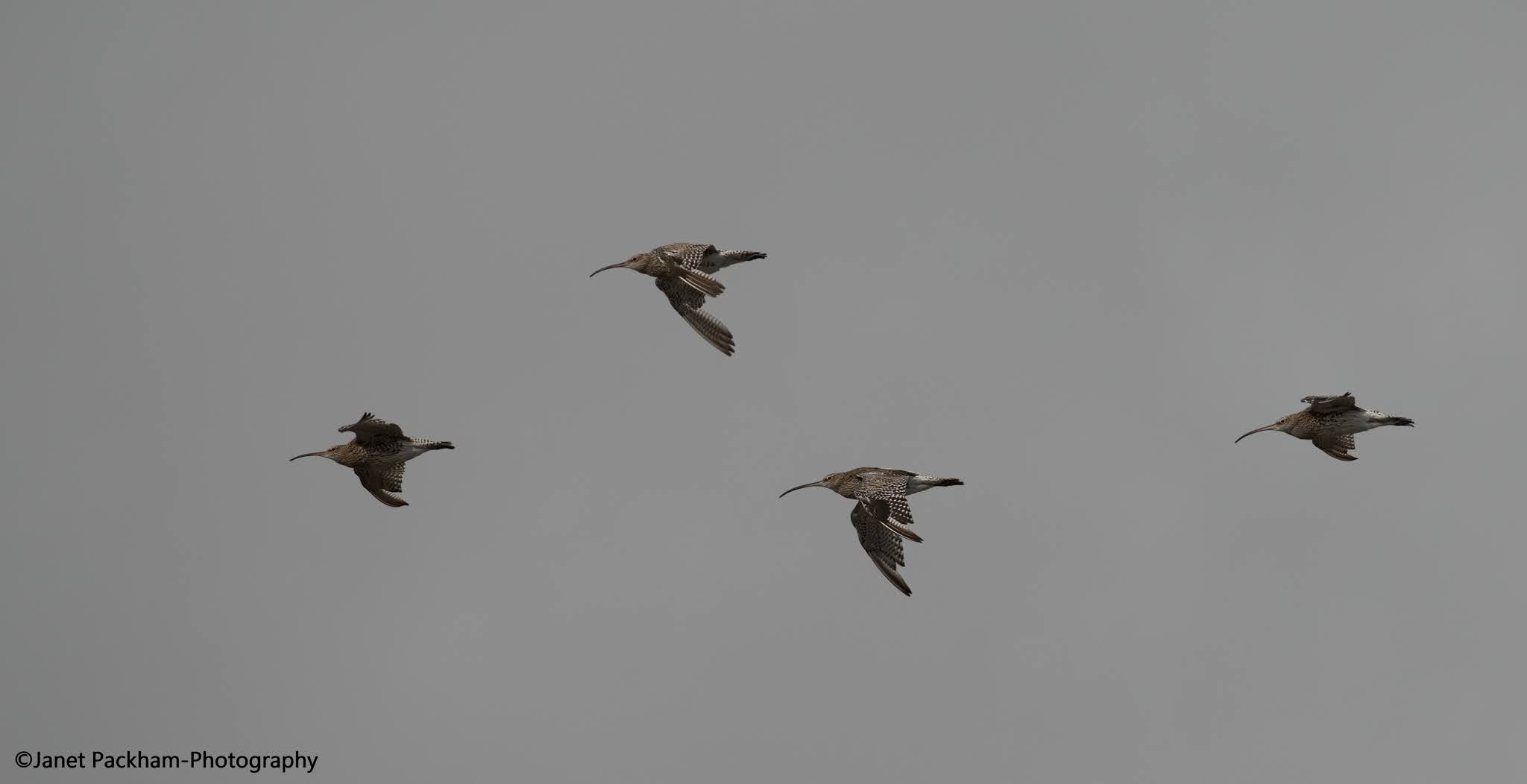
| Curlew |
![]() |
| Linnet |