Tuesday, 10 August 2021

Not a lot of Meds, but enough to go round.

Another steady west breeze all day, some light showers but largely sunny.

South Shore
A LDBWS event covered the rising tide this morning.
Report from Pete Crooks:

A group of 14 LDBWS members enjoyed searching for Mediterranean Gulls at Heysham on the incoming tide this morning. Highlights in roughly chronological order:

Heysham Nature Park – 1 Painted Lady


Red Nab (Brief check at low tide) – 2 Med Gulls (1 adult and 1 juvenile)


Heysham Outfalls – 8 Med Gulls (2 adults, 2 3rd CY and 4 juveniles)

1 1st CY Kittiwake

1 Eider

8 Turnstone


Red Nab (Longer check during incoming tide) – 10 Med Gulls (6 adults, including 1 with a right leg green darvic ring, 1 3rd CY, 1 2nd CY and 2 juveniles), 

1 adult Peregrine (briefly flushing the assembled waders and gulls)

2 Whimbrel  

1 Rock Pipit.


Assuming some duplication of Med Gulls at the different locations there were a minimum of 13 different individuals – 6 adults, 2 3rd CY, 1 2nd CY and 4 juveniles.


In addition 
Dave Hawkins had another two Kittiwakes at the back of the harbour, 1 adult + 1 juvenile 

Pete Marsh remained near Red Nab:
Sand Martin 1, in-off at red nab 
Manx Shearwater 1, very distant in against the turbines
7 non-juv Mediterranean gulls flew south past OE very early on (before 1030). Also 6 juvenile seen.

Before the LDBWS group arrived I (MD) had
Rock Pipits 3 on foreshore
Wheatear 5 - 2 on foreshore 3 on saltmarsh 
Wheatear amongst the Samphire at the edge of the saltmarsh 

A check of the Buddleia near the newt pond at 11:00 found it full of butterflies again, including:
Comma 1
Red Admiral 3
Painted Lady 4
Large White 3
Plus, Common Blue, Gatekeeper and Meadow Brown

These are two of the Red Admiral, both quite faded.

These Whitethroat were near the small anemometer, I initially thought Common, but Pete Crooks, advised Lesser. There is a female feeding at least two young, although the "young" look more than capable of feeding themselves.

It was a big meal, but fed in two servings. These are a couple of stills from the clip, but I still can't decide what the meal was.

Pete (M) also reported two Common Whitethroat in the Heliport scrub plus two Willow warbler in garden near horse paddocks. There was also a Willow warbler in scrub near the lighthouse. 

Middleton Nature Reserve late afternoon 
Mute Swan pair plus 9 cygnets, just one adult seen on the Tim Butler pond, but large areas are hidden from view.
Mallard 7
Gadwall 1 female with 3 young
Coot 3
Moorhen 9
Swallows 44 to SW. they started moving through at 16:00 and were still moving at 17:00. Biggest group were 12 that had been feeding over the central marsh before moving off, the remainder were in ones and twos.

Dragonflies - not a lot:
Emperor 2
Brown Hawker 1
Black-Tailed Skimmer 2
Common Darter 6

Butterflies - also unspectacular:
Peacock 1
Meadow Brown 3
Gatekeeper still abundant 
Common Blue, less so
Speckled Wood several but becoming faded
Large White 2
Small White 4 confirmed 
Green-Veined White also 4 confirmed, all looking very warn
Several other "small white" butterflies could have been either species.

Finally, in the spring (it feels like last week!), based on the blossom, I speculated that we should have a good crop of hawthorn berries to hold onto the winter Thrushes this year. The fruits are just beginning to ripen and it looks like a bumper crop.
The Hawthorn berries are starting to ripen - bring on the Thrushes!

Monday, 9 August 2021

Ringed Plover return and Eider numbers starting to grow

A steady WSW steady breeze all day, overcast with sunny spells, light showers in the evening.

South shore
I checked the rising tide (MD)
Rock Pipit 3 - one on foreshore and two near No.1 outflow
The foreshore Rock Pipit revealed itself to be a juvenile 
You'll need to open the image to see the detail

Willow Warbler 1 in scrub near lighthouse 
Terns sp (almost certainly Sandwich) 4 out together.
Mediterranean gulls 19. At four hours before high water there were 15 adult/3cy, 1 x 2cy and 3 juvenile on the seaward side of the beach next to wooden jetty. But they weren't feeding and flew off as the tide reached them, although at least two of the juveniles were flying around and trying the outflows.
Bar-Tailed Godwit 1 on beach next to wooden jetty - it always puzzles me why more long billed birds are not feeding here regularly, every time I checked this bird it caught at least two worms.
It catches two worms in this clip

In this clip it displays all it's defining features 

Janet checked towards high water and took these shots


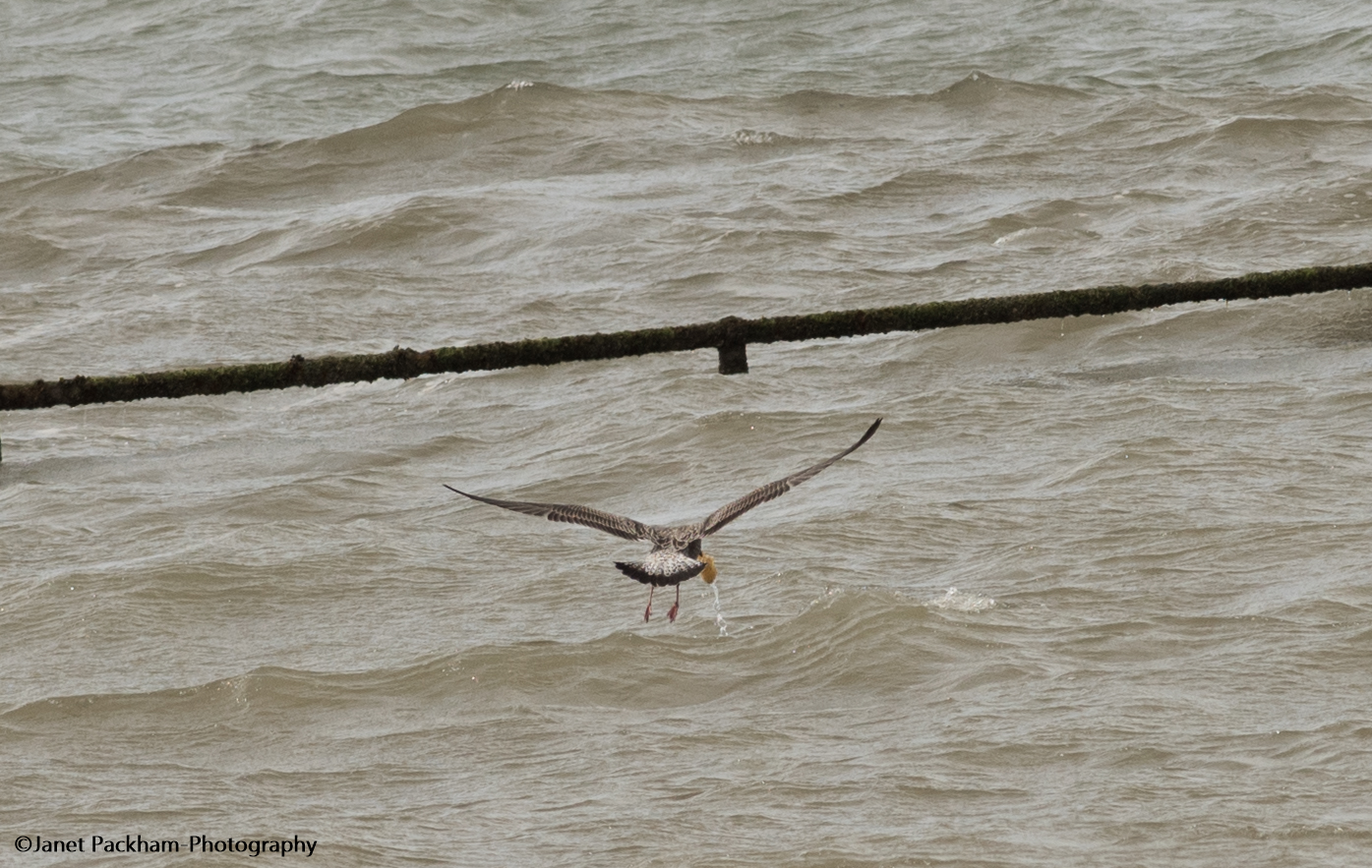
Juvenile Herring gull with Whelk egg cluster

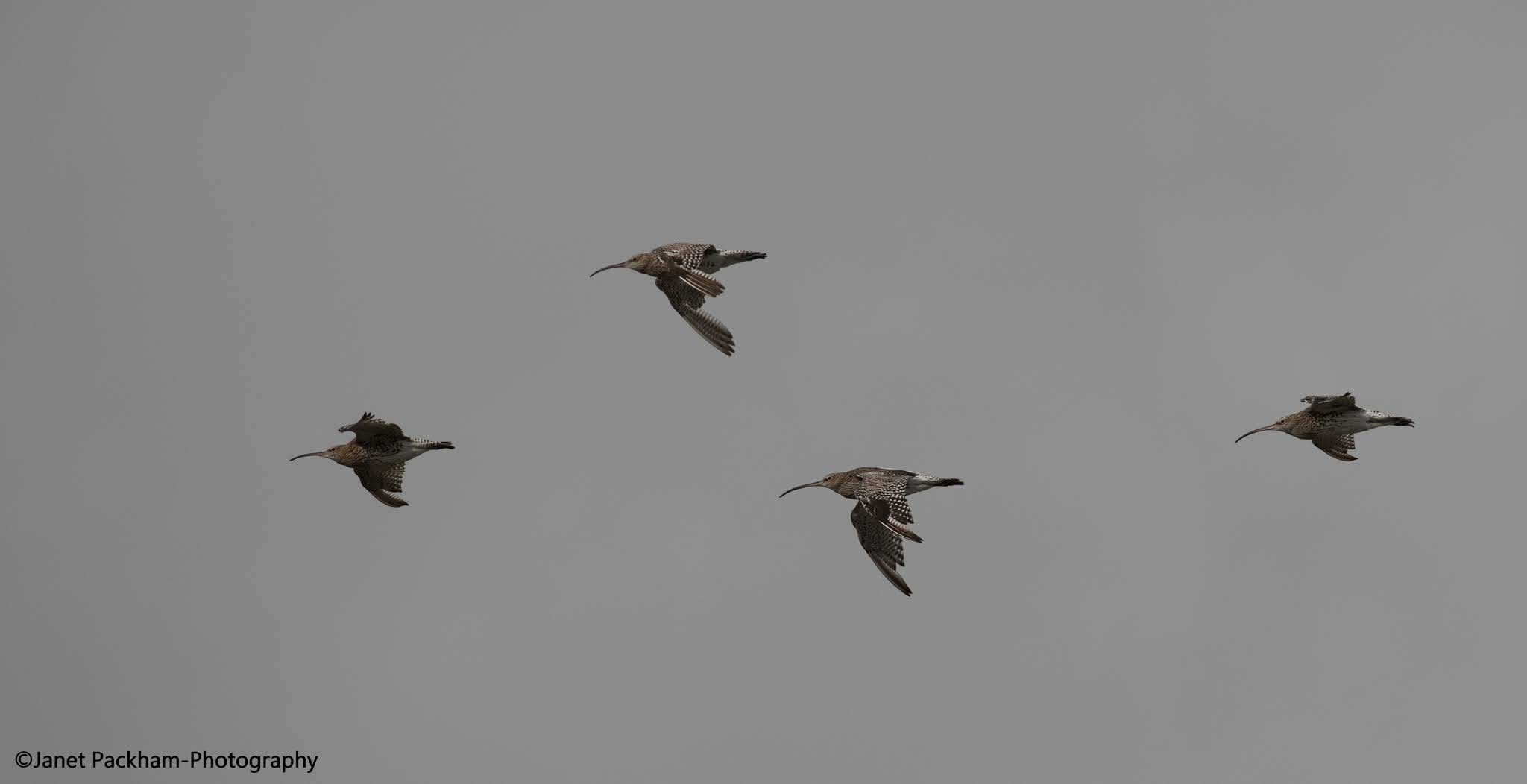
There are still lots of Curlew around

Curlew 

Plus a bird on a wire....
Linnet

Heysham skear - low water 19:30
Eider 18 
Great-Crested grebe 5 (2 pair + 1)
Little Egret 7
Ringed Plover c20 - it was nice to see and hear them back.


Sunday, 8 August 2021

Better wind, but it could have tried harder!

SW fresh wind in the morning, became stronger and more to west by late afternoon. Heavy showers.

Pete and Jean were first on the scene:
From Ocean Edge:
Mediterranean gulls 27 (4 juvenile).
Whimbrel 3

From North wall before Nick arrived, after that records would likely be duplicated:
Gannet 1
Manx Shearwater 1
Sandwich Tern 2

Report from Nick.

North harbour wall 10.45-13:15. Almost all the seabirds seen prior to 11.45.

Gannet 6 in, 1 out

Manx shearwater 11 out

Kittiwake juv out

Common scoter 57 out

Auk sp 1 in

Whimbrel 1 out

Oystercatcher c. 2000


I checked from the lighthouse late afternoon (MD)

Manx Shearwater 1 out

Nothing else within my range.

I was sheltering behind the lighthouse looking out to the sea for seabirds, meanwhile a seabird was also sheltering behind the lighthouse, and looking at me! This Kittiwake was only 5m away, also in the lea of the lighthouse.

Kittiwake in "unusual" plumage. Pete advises that it is a 2nd calendar year bird very
late moulting, by now it should be well advanced into winter plumage, i.e. adult plumage 
Remarkably, despite a few walkers, one with a dog, it was not disturbed while I was there, so I never saw it in flight.


Willow Warbler 1 in scrub

Painted Lady 1, briefly on the Unscented Mayweed - a bit of a surprise.


Mediterranean gulls - at least 18 including 2 juvenile and a 2nd calendar year 

There were at least 6 on the sea out from the lighthouse, even after the beach next to the jetty had become exposed. There were 12 on the beach when I left. This adult/3cy came in from the north to join other meds on the sea.


Not a great shot this one, but this young Herring gull appeared reluctant to let go of what looks to be a blue plastic cap. I hope it wasn't somehow physically attached to it!


Saturday, 7 August 2021

An ill wind

An unexpected deviation in the wind direction, it started SSE, before swinging back SW by the evening. Heavy and prolonged showers in the morning, becoming less frequent, but still heavy.

The wind direction made it unlikely to blow anything in, and the heavy rain made visibility atrocious. Pete tried a check from Ocean Edge but couldn't see anything on the sea.
Mediterranean gulls 7
Whimbrel 2
Rock Pipit 3
The wind still looks good for tomorrow though.

Heysham skear - low water 18:10
After a heavy shower, it was actually sunny, shame there was little to see.
Great Crested Grebe 1
Eider 2
Low numbers of Curlew, Redshank and Turnstone. c1000 Oystercatcher 
Still high numbers of large gulls, mainly Herring.

Howard was also checking the sea, but nothing seen, so he "focused" on the Turnstone. c150 split between the old Heliport wall and the lighthouse area.

Summer plumage Turnstone
As ever with high definition images, best opened to appreciate the detail 

Turnstone shaking off the rain
I bumped into Howard as he was returning to his car, unfortunately he hadn't managed to shake off the rain, and was considerably wetter than the Turnstone. But he had enjoyed himself.

Finally just a couple of moths from earlier in the week. Neither rare, but but both attractive, and nice to see.
Udea lutealis on Middleton Nature Reserve Thursday - picture by Janet


This from Kevin's overnight light trap yesterday.
I had a rather lovely Drinker Moth this morning. Again, a fairly common moth, but it's somehow eluded me until now.

Drinker moth

Friday, 6 August 2021

Plenty of wind blown sea birds, plus Med numbers continue to increase

A fresh south wind quickly strengthened and shifted to SW, ending up being a strong wind. Heavy and prolonged showers in the morning became lighter and less frequent after lunch.

By lunchtime there was plenty of wind blown birds along the mid channel.
Pete checked just as the tide was starting to ebb.
At that time a number of birds were feeding in the mid channel, including:
Gannet 6
Manx Shearwater 1
Sandwich Tern 1
A distant bird was likely to have been a Fulmar

Tipped off by Pete, I checked from the lighthouse 13:30 - 14:30. By that time all the birds were all heading out. NB, these records are only what was spotted with binoculars, there could have been many more further out (MD)
Gannet 14 - from 2nd calendar year to adult
One of the immature Gannets

Immature Gannet next to juvenile Herring/LBB gull

This clip is an adult Gannet with two immature birds (I'm not good at ageing young Gannets).


Manx Shearwater 40 - this clip shows the largest group seen together. Not easy viewing as both the birds and myself were being buffeted, but at least 11 birds involved.

This flock of 30+ dark birds flew out. I could only think Common Scoter, but couldn't really see enough. Scoter are not a species that I am very familiar with, and the last time I thought distant birds were Common Scoter, they turned out to be Pink-Footed geese! These are not geese, but I'll let you decide on the species for yourselves. (MD)

Pete advises that it's looking good for some autumnal Seawatching over the next few days 

Mediterranean gulls 
Pete checked the shore and Red Nab after high water - minimum 19 Meds
Adult Sandwich Tern and a juvenile Mediterranean gull on Red Nab

I checked the beach near the jetty, just as the tide was exposing it. 26 - 19 adult/3cy, 3 x 2/3cy, 5 juvenile. This clip is just some of them, I know it's similar to yesterday's clip, but it is an impressive scene to witness.

 Shaun did a thorough check when the beach was fully exposed, just after low water
41 adult/3cy, 1 2cy and 3 juvs 

So the absolute minimum number of Meds seen today 49 - 41 adult/3cy, 3 x 2/3cy and 5 juvenile 


Thursday, 5 August 2021

Saharan seascape

 The wind started from the east then freshened as it swung SE. Mainly overcast with a few light showers and occasional sun.

South shore
So far the only records today are from a couple of visits here by myself (MD)
Mid morning - approaching high water
Common Whitethroat - at least two female/immature near the small anemometer (not normally seen here)
Migrant Hawker 1 also around the small anemometer 
Little Egret - the bird with only one foot was waiting by the saltmarsh creek. I was hoping to see it fishing here on my return, but it had moved onto the saltmarsh by then. 
Whimbrel 2 came off the saltmarsh 
Curlew 52 feeding along waterline 
Rock Pipit 2 squabbling on the foreshore 
Mediterranean gulls 9 - 4 adult/3cy, 1 x 2cy and 4 juvenile - Roosting on the mud out from the saltmarsh. This clip shows three of the juveniles, just checking again, to make sure that a feather isn't food.

This is a unusual angle of the fourth juvenile Mediterranean gull.
Slightly more practical use of energy as it tries to catch a passing insect

Butterflies:
The wind was due east when I started, there was nothing on the Buddleia, the same three Green-Veined Whites as yesterday were near Red Nab, but nothing moving along the foreshore or on the saltmarsh, just one static Large White seen. But by my return the wind was SE and there were now several Large Whites and two Small Tortoiseshell  moving south along the eastern side of the saltmarsh.

Just another quick check in the afternoon as the beach near the wooden jetty became exposed.
The wind was still quite strong from the SE, the tide was out and it was still warm. But no sun and it was actually raining when I arrived at the lighthouse area, so no surprise that no insects were coming in off the sea again.
Whimbrel 3
Mediterranean gulls 18 - there were 12 adult on the beach (possibly some were moulted 3rd calendar year)  plus another between the outflows. 1 x 3cy (probably), 1 x 2cy plus 3 juvenile 
They arrived at the beach from both the north and south side. This clip is just as the mud became exposed, there are 9 Meds, including the flying bird, plus a Black-Headed gull. The two obviously immature birds are the first and last in the clip.

All the gulls were paddling again today, it seems that is the easiest way to catch sand mason worms this year. The worms are much smaller than the ones they catch when they are feeding on patches on the dry beach. I have always suspected that bounty is related to the breeding cycle of the sand mason worms, which will obviously only involve mature worms. This clip shows two of the juveniles feeding, the one at the back catches a worm at the start of the clip and makes a bit of a meal of eating it (pun intended today). The closer bird appears to catch something, but I am sure it is only the top of the worm's tube.

This faded Ringlet was near the newt pond, it's the first I've seen for a week or so, and I had assumed that they were done for the year.
Ringlet butterfly 

Not so many butterflies around the Buddleia,  c5 Peacock, plus low numbers of Meadow Brown and Common Blue.
The Migrant Hawker was still around the small anemometer, I managed a couple of shots this afternoon.
This in flight shot is just to show location, the tower behind is the tall anemometer
as seen from the small anemometer. Fortunately the hawker eventually settled

Not quite fully mature male Migrant Hawker.

We are just finishing a period of neap tides, so for almost a week the mud out from the saltmarsh has not been covered by the tide. The hot sun over the last few days has dried it out. So when the wind freshened from the SE this morning, it created a Saharan like sandstorm. Well, perhaps not Saharan like, particularly with the Power Stations in the background, but at least enough to disturb a few of the roosting gulls.


Wednesday, 4 August 2021

Purple Hairstreak confirmed

The west breeze continues but with a bit of south in it. Some clouds but mainly sunny.

Heysham Nature Reserve 
Purple Hairstreak - last year there were a couple of "probable" sightings, and there have been some unconfirmed repots this year, but yesterday Linda and Barbara had a definite sighting at 17:00. This is the most likely time of day, check out the oak trees on the northern side of the plateau.

Middleton Nature Reserve (Janet)
Good numbers of butterflies here too. Including this Painted Lady
Painted Lady 
These droppings were amongst the rocks by the main pond, Janet wasn't sure, and I can't be certain, but they do look like Otter spraints (MD).
Waterside droppings containing broken crayfish shells

South shore
Wheatear 1 on Ocean Edge foreshore 
Rock Pipit 1 on Red Nab
Mediterranean gulls 5 adult/3cy on the beach next to the wooden jetty.

Insects:
It was hot, the tide was out, ideal conditions for insects coming in off the sea near the lighthouse, if the breeze had been from the east. But the breeze was from the west. When you have a theory of insect movement based on wind direction, it is important to check both predictions. Today there should have been nothing coming in off, and that's exactly what I saw. The only butterflies were a couple of resident Common Blue.

But there was plenty of butterfly movements inshore. The Buddleia near the newt pond was again very busy, but the butterflies did seem to be moving through, particularly the Large White. 
All the butterflies seen yesterday were present again, plus:
Painted Lady 1
Brimstone 3 (all males)
Brimstone butterfly feeding on Ragwort 
But most of the feeding was on the Buddleia. The light reflecting off the surrounding foliage made the wings look pale green, showing their excellent camouflage effect, as a leaf.

At least 7 Large White passed quickly through in the 10 minutes I was watching. Once again, they were reluctant to rest with open wings (not good camouflage). This was as close as I got.

It was clear that a number of the butterflies were moving through, but it wasn't obvious which way, so I had a walk along the foreshore and saltmarsh to see if anything was coming in off.
There was a small group of, probably resident Green-Veined White near Red Nab, but nothing moving either way, there or along the foreshore. But there were plenty of butterflies around the saltmarsh:
Large White 5+
Peacock 1
Small White 7+
Small Tortoiseshell 4
They were feeding, but also gradually moving south as they did so. So presumably the general movement was south, probably along the coast line. This does fit with the element of south in the breeze at this time. (MD)

Finally a bit of news on the one legged Little Egret (see post 2/08/21) Kevin spotted it resting on Red Nab. It wasn't stained today, and Kevin's shot shows that the leg is severed just above the foot, and if it is the result of an accident, as opposed to a deformity, it has healed well (pun not intended, but it is a good one!). Red Nab would not be a good place for it to feed, as the technique here is generally to disturb the mud with one foot while standing on the other. But it will be fine in the ebbing drains around the skear, where they just have to stand and wait for the prey to swim past them. Hopefully I'll see it feeding one day when I'm down there.


Tuesday, 3 August 2021

Sand Martins heading south

A very light southerly breeze to start with, later freshened and moved to the west. Sunshine all day.

Middleton Nature Reserve 
Ringing report from Alan:

Much as yesterday the conditions were far from ideal for ringing.  It seemed that most birds had moved on during the last two clear nights.  The catch was therefore rather low:

Grasshopper Warbler  1

Blackcap   3

Chaffinch  3

Willow Warbler   2 retrap

Lesser Whitethroat  2

Reed Bunting  1 retrap

Sedge Warbler  1

Song Thrush   1

Blackbird  1


South Shore (MD)

On these very low neap tides, high water doesn't get much higher than Red Nab, so I had a walk along the water line, nice walk, but little to see other than the large gulls, Oystercatcher and Curlew.

Holidaymakers disturbed the small roost of small gulls on Red Nab revealing:

Mediterranean gull 4 (3 adult and 1 3rd calendar year)

No sign of Wheatears or Rock Pipits today.

Sand Martin 3 flew south out from the saltmarsh - later a single bird flew south past my house.


There are large stands of Buddleia (butterfly bush) near the pond behind Red Nab. The flowers this year have been very impressive, but largely butterfly free! Today they were alive with butterflies.

Red Admiral 3


Peacock 10
Peacock butterfly 

Comma 7


Large White 2 - these were particularly frustrating. I find these second generation butterflies very striking, especially when seen against a large purple flower. Both the ones seen here did feed on the Buddleia, but they quickly moved on before I got a decent shot. The picture below is one of two that were on the saltmarsh.
Large White butterfly 
Meadow Brown 4
Meadow Brown

Small Tortoiseshell 5

Small Tortoiseshell 
Small Skipper 2


Also around the Buddleia, but not seen feeding on it.
Gatekeeper 5

Common Blue 3


Heysham skear (low water 14:50)

Another nice walk, but with little to see. Nothing on the sea except gulls and the odd cormorant.

Little Egret 7

Curlew numbers still low c20

Whimbrel 1

Plus the ever present Oystercatcher and a scattering of Redshank and Turnstone 


It has been a good year for moths turning up in gardens (I understand it has been a good year for moths generally). This Vapourer moth turned up in Janet's garden. It has to be a male, as the females are wingless.

Vapourer moth


Monday, 2 August 2021

There's always a vegetarian option!

Very light west wind early on freshened slightly as the day progressed. Mainly sunny.

First of all an apology. There were some items missed yesterday and observers, originally mixed up. This is mainly down to my recent email address change. Unfortunately most mail systems offer recent addresses as the first option, even if that address has been changed in contacts, perhaps I should have radically changed it, but it would take me years to remember a totally new address! My email address on the sidebar is correct, if you have anything to report. Yesterday's post has now been amended. Malcolm.

Middleton Nature Reserve 
Ringing report from John:

Weather turned out differently than forecast, with it being clear and sunny quite early. Not the best conditions for ringing.

Sun on the nets early and many birds would have moved on during the night, taking advantage of the conditions.

Given this, a reasonable catch, which comprised:


Sedge Warblers x 7

Blackcaps x 3

Chiffchaffs x 2

Willow Warblers x 2

Whitethroats x 4

Grasshopper Warblers x 1

Lesser Whitethroat x 1

Cetti's Warbler x 1

Bullfinch x 3

Reed Bunting x 1

Bluetit x 1

Dunnock x 1


Of these the vast majority were young birds, and all but two were new birds.


Janet had a quick check in the morning and located two Canada geese on the main pond.

Canada geese
Unfortunately, the aggressive male Mute Swan was having none of it and eventually drove them off.


I had a look in the afternoon (MD)

Mute pair plus 9 cygnet (the Tim Butler pair not checked)

Gadwall 1 female with 3 young

No Mallard seen today?

Green Sandpiper 1 calling from the western scrape


Dragonflies:

Common Darter lots of mature males and females throughout the reserve

Mature male Common Darter

Emperor 6+
Black-Tailed Skimmer 2 males on main pond
Migrant Hawker 3
Brown Hawker 4+ This female is ovipositoring 


Butterflies included, in order of abundance:

Gatekeeper 

Meadow Brown

Small White (Alan pointed out that the bulk of the whites around the ringing area are Green-veined, so the likelihood is that some of the ones that I saw were too, either way they are about)

Common Blue 

Speckled Wood 

Comma 3

Large Skipper 2

Peacock 1


This young Sparrowhawk was trying to hunt. I'm saying it's a young, but only based on it crying like a baby, suppose it could be a soft adult (MD)


Sparrowhawk 


South shore mid morning 
Wheatear 2 on Ocean Edge foreshore - they seemed to be in association.
Female/immature Wheatear (MD)
The other bird was a youngster

Rock Pipits just 2 on Red Nab
Whimbrel 1
Mediterranean gull - just one seen on the feeding beach. It's difficult as they are moulting to be sure of the age of the younger birds. I couldn't decide if this one was a second or third calendar year bird.
But Pete advises - 3cy moulting the last of its primaries - quite a black tipped one .

Starlings don't often get a mention but the numbers in the harbour are growing. There were c200 feeding today
These on the water side of the wall were clearly after invertebrates, there are a couple of Linnet in this clip too. All are totally unfazed by a jackhammer!

There were as many feeding on the fence side of the wall, this is where the first vegetarian option comes in. These are feeding on blackberries. In the middle of the wall is a watering hole. Watch the bird front middle with the blackberry.
It's not clear if some only eat invertebrates and some only berries, or if they mix and match. But judging by the mounds of purple guano on the wall roost, some eat a lot of berries

This is evidence of another bird that has taken a vegetarian option. This gull pellet is 6cm x 3cm, so either Herring gull or Lesser-Black Backed gull. It is completely seeds and seed husks, most looking hardly digested. The gull must have been feeding in a wheat field as it was being harvested. I've never seen a totally vegetation gull pellet before.
This large gull pellet is completely vegetation.
The flies are not part of the pellet, they are just laying their eggs in it.

This final piece is a bit harrowing, so do not proceed if you are overly sensitive. There were a number of Little Egret flying around this morning (5 birds plus the three regulars). This one has lost half of one leg.
Little Egret with half a leg missing 

The wound looks clean, but I would have expected it to be the same colour as the leg if it was an old wound (only speculation, I have no knowledge of how egret wounds heal (MD)). Also it's tail was stained and possibly incomplete. The staining could be a direct result of the trauma or possibly just a consequence, i.e.not being able to stand correctly to defecate. I can't think of any natural event to cause this, at least not in this country. By natural, I mean not involving human activity. I suppose Egrets feeding in the rivers of Africa can be injured in this way, if grabbed by a crocodile. But my gut feeling is that it's more likely to be human related (farm machinery?) in this country. Hopefully it will manage ok. I have seen two legged Egrets feeding on just one leg.